
Who we are
The European Competence Centre for Science Communication is led by the COALESCE consortium, which is funded by the European Union for an initial period of four years. The Competence Centre itself is virtual in nature and connected to a network of “physical” national and regional hubs (the “COALESCE N&R Hubs”) across Europe and beyond.
The role of the Competence Centre is to consolidate existing knowledge of science communication, curate and make accessible quality resources, tools, training and policy recommendations, in order to improve science communication for all actors in Research and Innovation.
Tools available on this platform will be co-created through participatory activities by COALESCE N&R Hubs and members of the wider Community of Practice, representing relevant stakeholders from diverse sectors involved in science communication.
Mission and Vision
Our mission is to consolidate knowledge, build capacity and encourage science communication recognition, connect communities to cultivate trust, support evidence-informed decision-making and foster social justice.
The European Competence Centre for Science Communication wants to become the main reference platform for science communication daily practice.
Conceptual framework
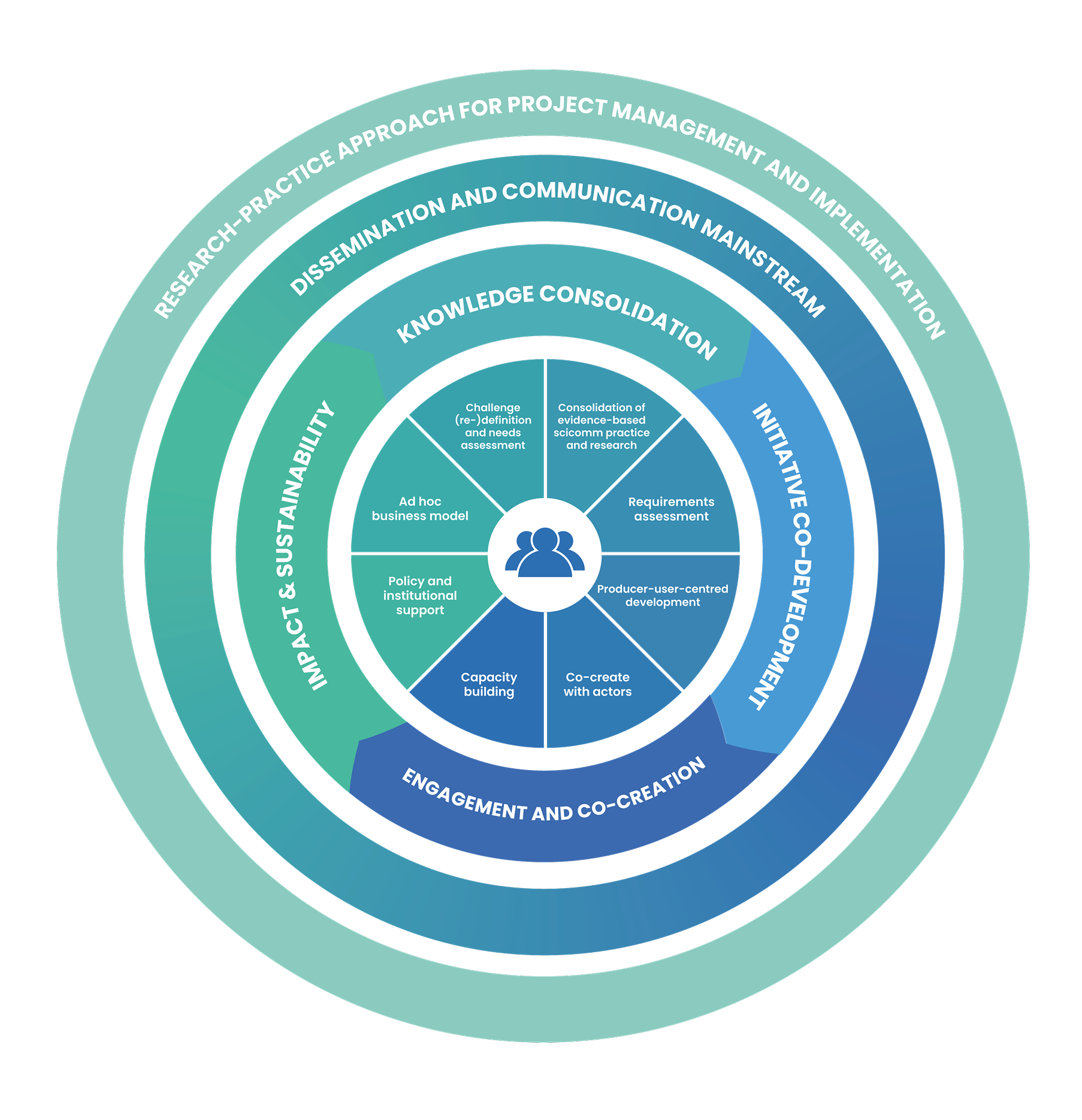
The SciComm Innovation Cycle constitutes a conceptual framework for an iterative process for producing and sustaining science communication initiatives looking to innovatively tackle critical challenges at the science-society interface. The Cycle is imagined as a way to bring new initiatives, tools, and resources development and practise closer together under a research-practice co-leadership, promoting a wider perspective instead of a solely solution-driven approach. Challenges faced by SciComm practitioners and their underlying causes are unpacked, understood and defined, with communities of practice, including multiple SciComm actors, at the centre of the Cycle. This cycle demonstrates an iterative process in which SciComm initiatives are developed and evolve through the stages of needs assessments, knowledge consolidation, co-development, co-creation and participation with relevant actors, and sustainability and long-term impact.
The development of the European Competence Centre for Science Communication virtual platform and connected network of National and Regional Hubs, is based on the application of the SciComm Innovation Cycle. This conceptual framework will continue to evolve through the testing and validation within the COALESCE project.
Where do we come from
The European Competence Centre for Science Communication will be fully established by March 2027. Its development is being undertaken with a strong basis of co-creation amongst multiple stakeholders by the COALESCE project (“Coordinated Opportunities for Advanced Leadership and Engagement in Science Communication in Europe”), funded by the European Commission, under WIDERA-ERA-60.
The consortium brings together 13 organisations previously involved in eight sister projects (CONCISE, RETHINK, QUEST, NEWSERA, TRESCA, ParCos, ENJOI, and GlobalSCAPE) that were funded through the “Science with and for Society” (SwafS-19) programme “Taking stock and re-examining the role of science communication”.
COALESCE is building the Competence Centre with resources and tools that promote high-quality, evidence-based and interdisciplinary science communication. It is doing so by curating the knowledge gained from the eight SwafS-19 sister projects as well as from other past and ongoing EU-funded and national science communication initiatives.
The Competence Centre will host the main results of the SwafS-19 projects, such as the ENJOI Observatory, a living landmark product of the ENJOI project, with the main goal of viewing the European media landscape with a focus on science journalism, reflecting on how to foster engagement, openness and innovation.
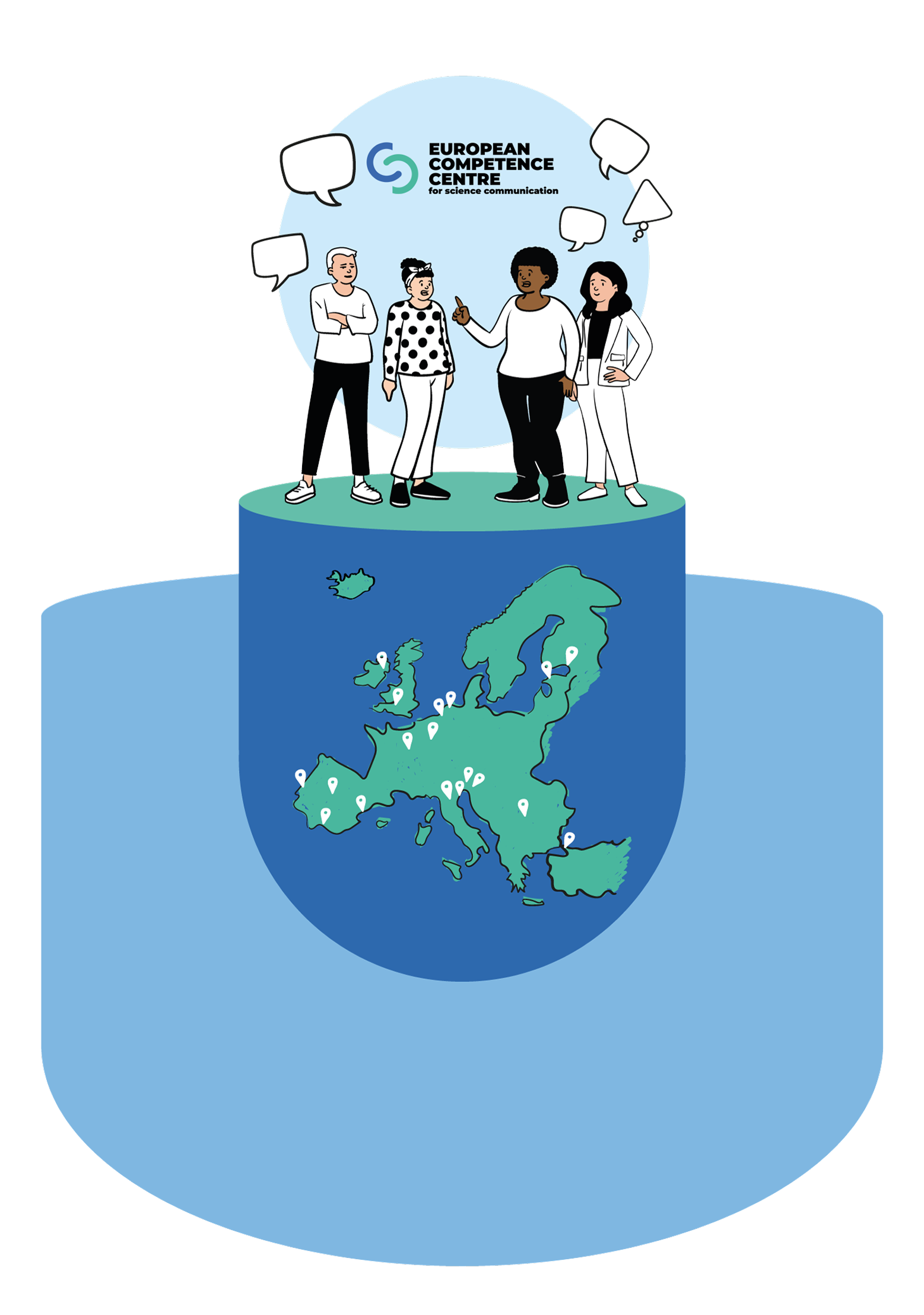
The COALESCE N&R hubs, representing the EU 20 + UK and Ukraine, will act as physical hubs and multipliers of the Competence Centre, enriching and adapting the multiple resources available to different languages and cultural contexts.